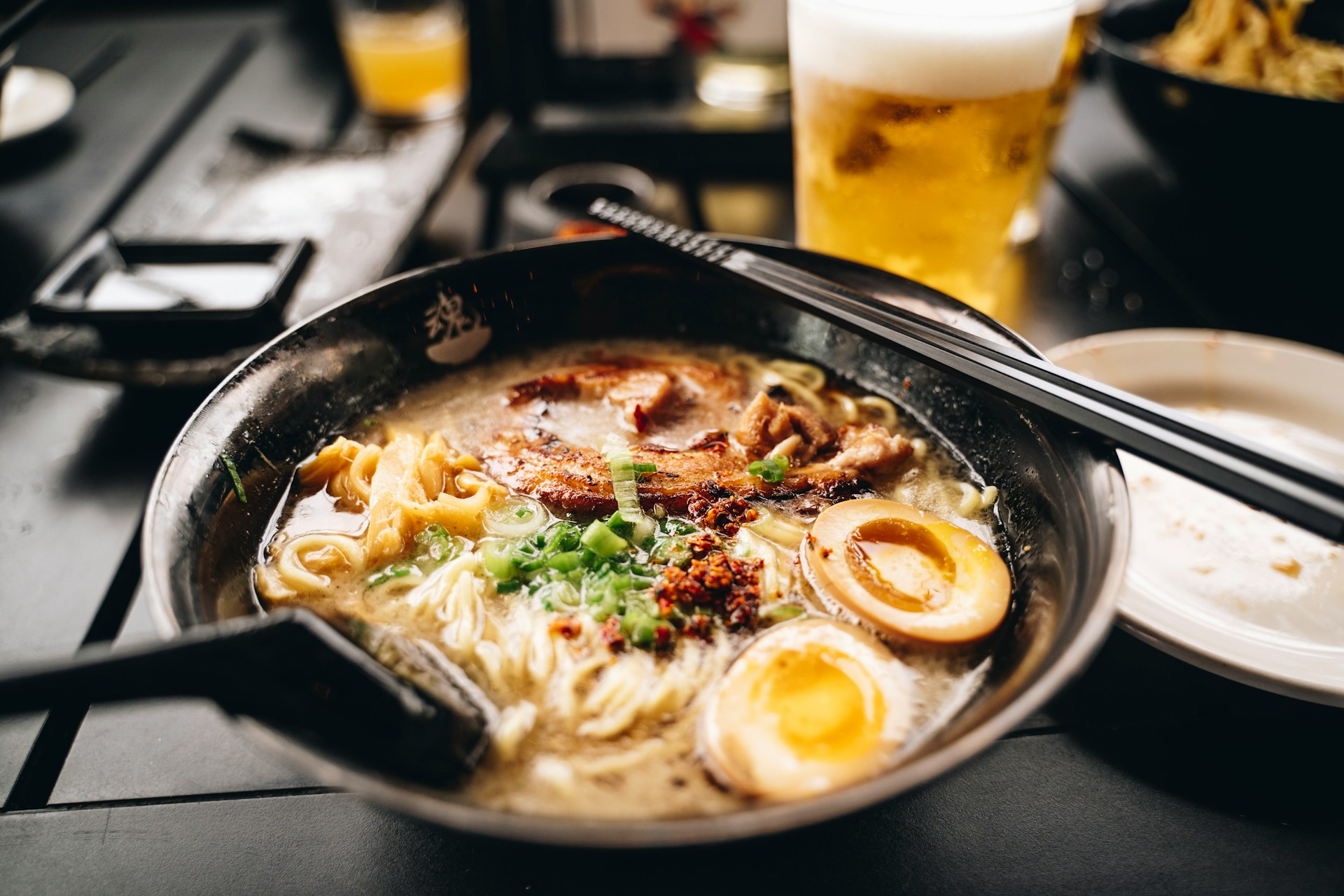
Ramen is arguably Japan’s most beloved comfort food. A steaming bowl of noodles in rich broth, topped with chashu pork, a soft-boiled egg, and nori — it sounds simple. But once you try the real thing in Japan, you’ll understand why people travel across the country just to eat it.
This is everything you need to know.
A Brief History of Ramen
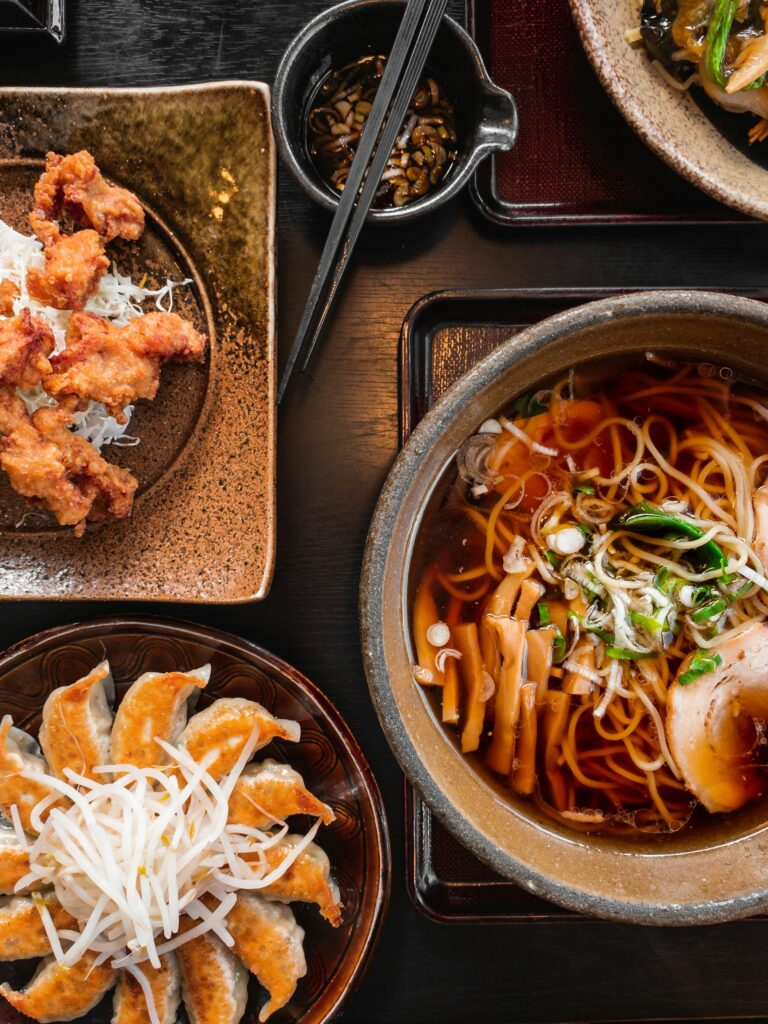
Ramen’s origins are surprisingly recent. It’s believed to have been introduced to Japan from China in the late 19th century, but it wasn’t until after World War II that ramen became truly widespread — affordable, filling, and available everywhere.
In 1958, Nissin founder Momofuku Ando invented instant ramen, changing the world forever. But the ramen you’ll find in Japan’s restaurants today is something else entirely — a craft that chefs spend years perfecting.
Today, Japan has over 200,000 ramen restaurants. There are ramen museums, ramen competitions, and ramen shops with Michelin stars.
Ramen is Regional — And That Matters
One of the most fascinating things about ramen is how much it varies by region. Japan’s geography and local ingredients have shaped completely different styles over centuries.
Think of it like pizza in Italy — the concept is the same, but every region has its own version, and locals will passionately defend their own.
The Main Types of Ramen
Shoyu (Soy Sauce) 醤油 The classic. A clear, brown broth made with chicken or pork stock and seasoned with soy sauce. Clean, savoury, and well-balanced. This is the style most associated with Tokyo. Best for: first-timers
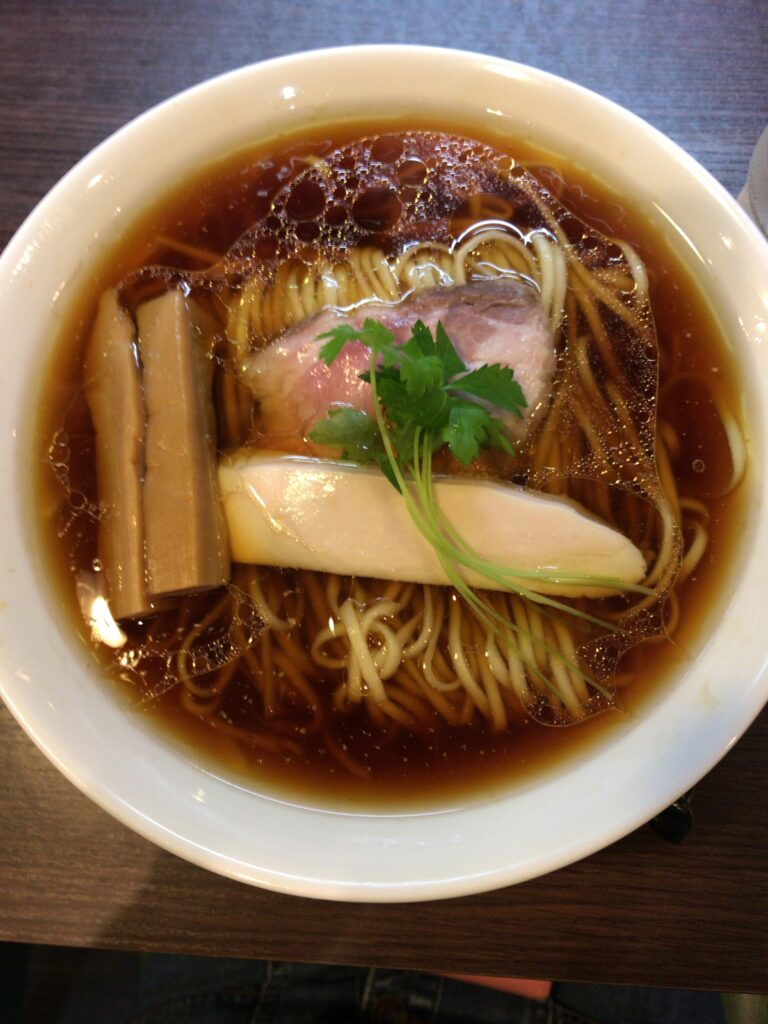
Shio (Salt) 塩 The lightest of all ramen styles. A pale, clear broth seasoned simply with salt — delicate and clean. Often made with seafood or chicken stock. Popular in Hakodate, Hokkaido. Best for: those who prefer subtle flavours

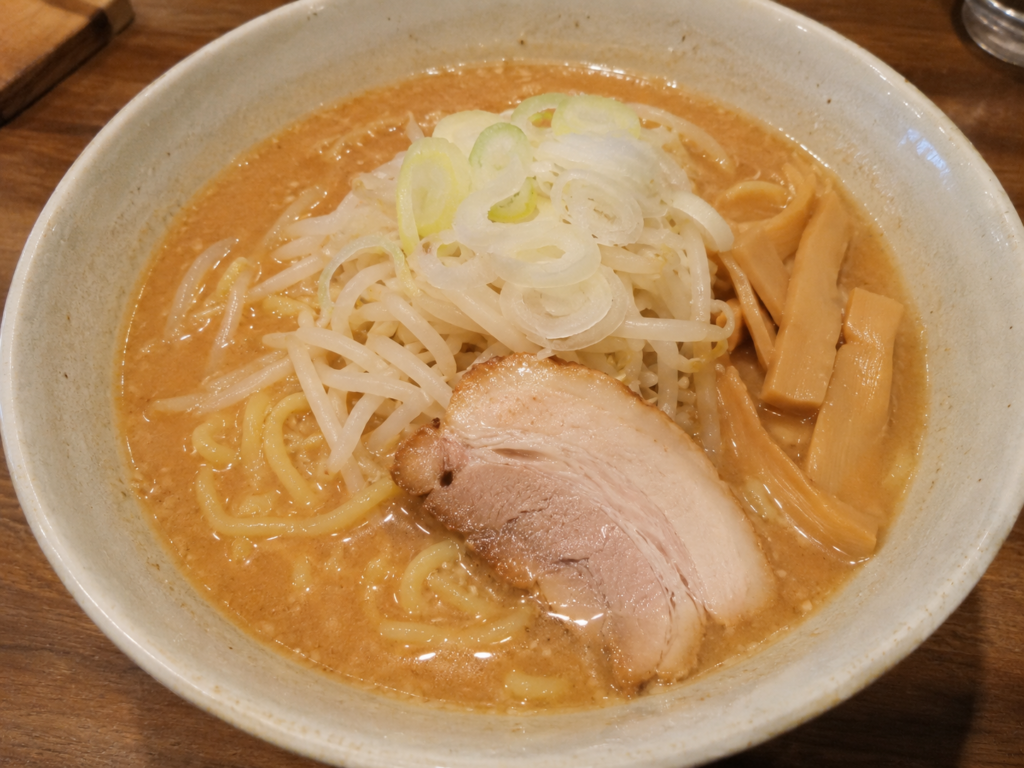
Miso 味噌 Rich, hearty, and deeply flavoured. Miso paste is blended into the broth, creating a thick, complex soup. Often topped with corn, butter, and bean sprouts. Born in Sapporo, Hokkaido. Best for: cold weather eating
Tonkotsu 豚骨 The most intense of all. A milky white broth made by boiling pork bones for hours until they break down completely. Creamy, rich, and deeply savoury. This is Fukuoka’s signature style. Best for: those who love bold, rich flavours
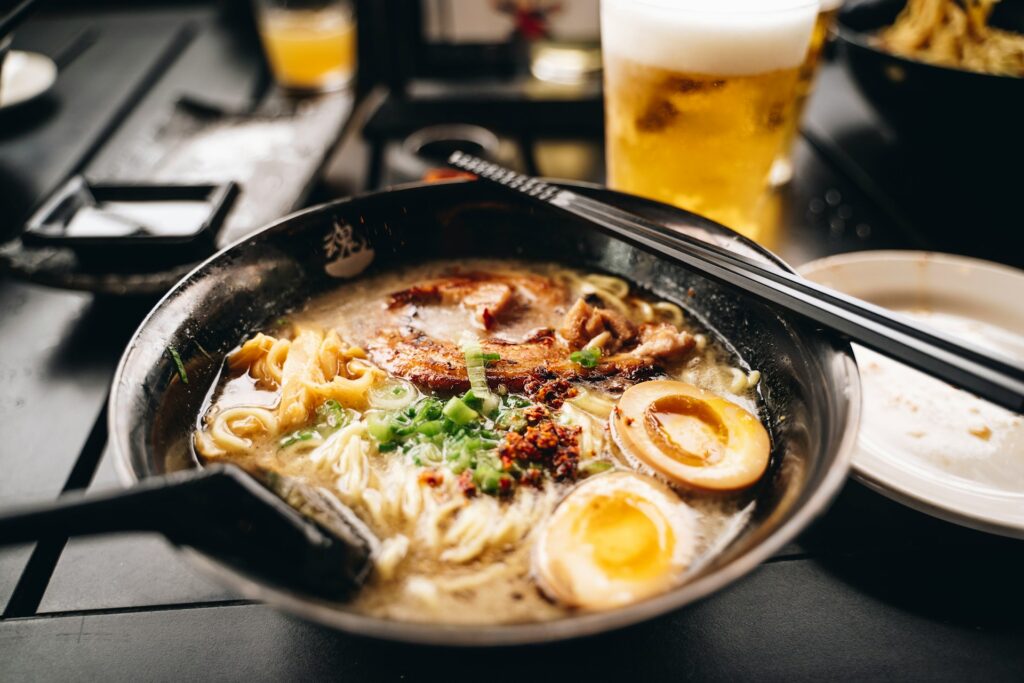
Tantanmen 担々麺 A Japanese take on Chinese dan dan noodles. Sesame-based broth with chilli oil, minced meat, and bok choy. Nutty, spicy, and deeply satisfying. Growing rapidly in popularity across Japan. Best for: spice lovers
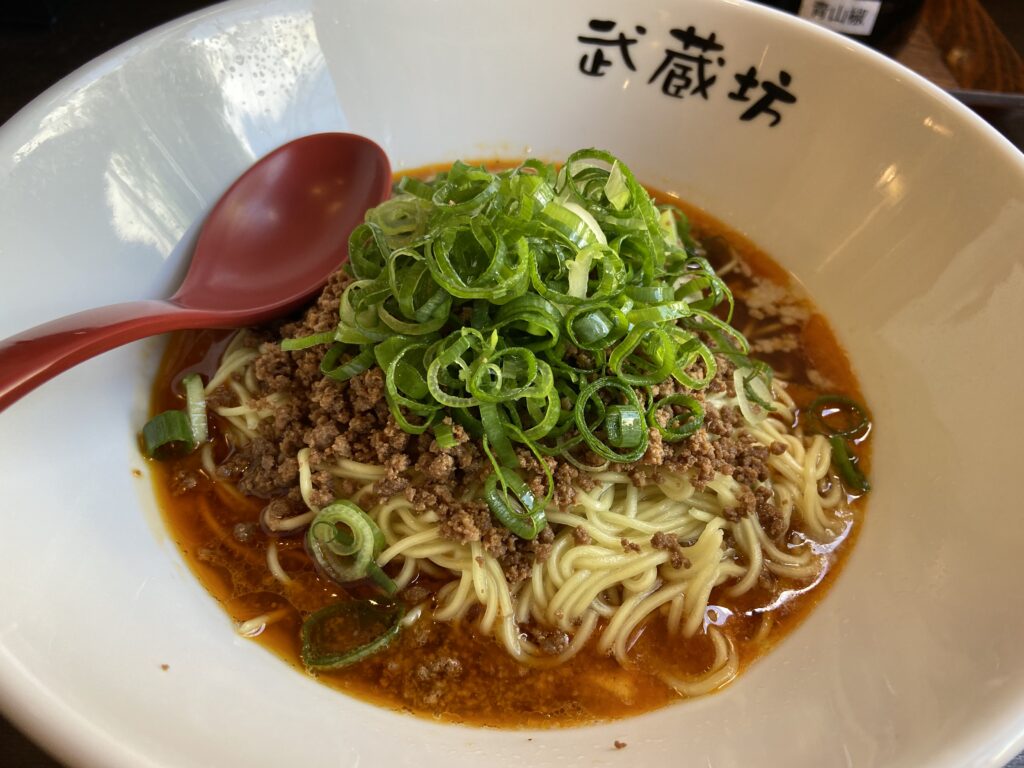
Mazesoba 混ぜそば No broth at all. Noodles are served dry, topped with minced meat, egg yolk, green onions, and a flavoured sauce. Mix everything together before eating — hence the name. Rich, intense, and addictive. Best for: those who want something different
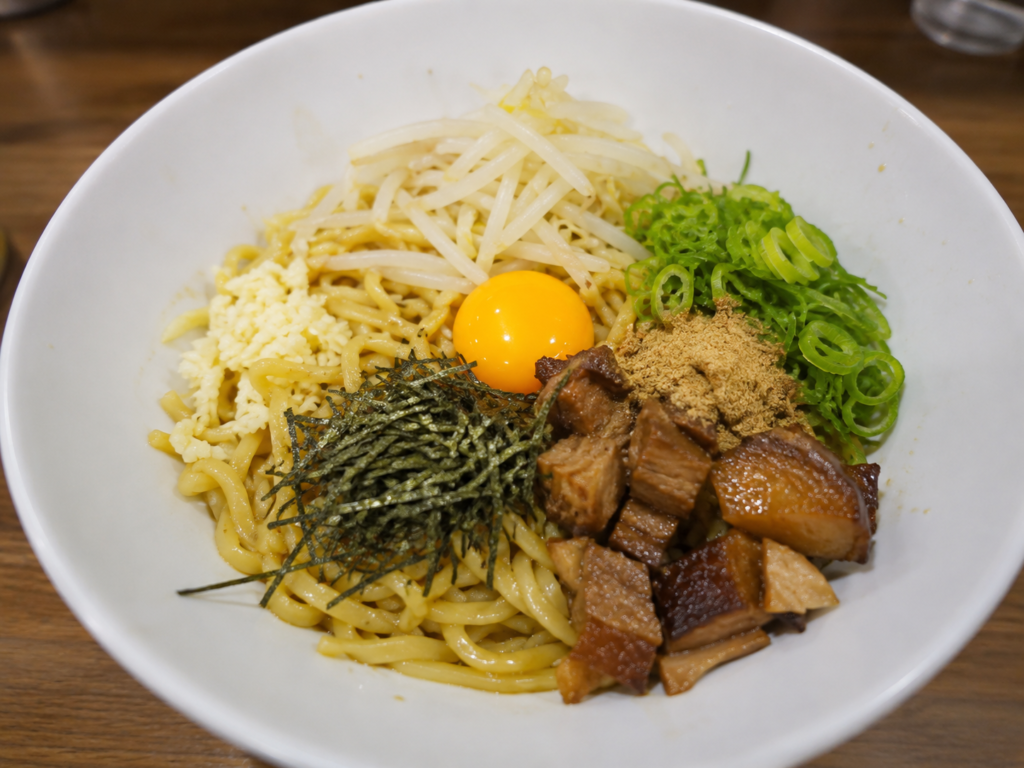
Tsukemen つけ麺 Noodles and broth served separately. Dip the cold or room-temperature noodles into the hot, concentrated broth before each bite. The broth is usually much richer and more intense than regular ramen. Popular in Tokyo. Best for: noodle lovers who want full control
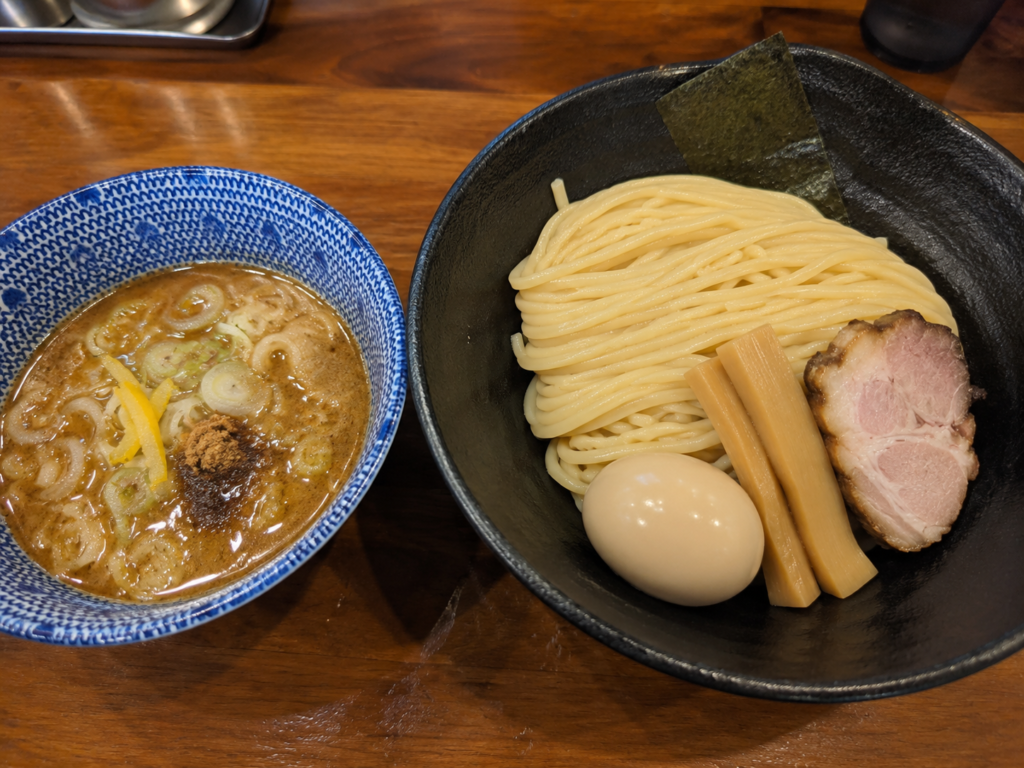
What Goes Into a Bowl of Ramen?
Beyond the broth and noodles, a great bowl of ramen is all about the toppings:
- Chashu → Slow-braised pork belly, meltingly tender
- Ajitsuke tamago → Soft-boiled egg marinated in soy sauce and mirin
- Nori → Dried seaweed sheet
- Menma → Fermented bamboo shoots
- Negi → Spring onions
- Naruto → Fish cake with a pink spiral pattern
- Butter & corn → Classic miso ramen toppings
Every shop has its own combination — and its own secret recipe.
The Chashu — More Than Just a Topping
At serious ramen shops, the meat gets just as much attention as the broth.
Chashu — the braised pork that sits on top of your bowl — varies enormously from shop to shop:
- Some slow-braise pork belly for hours at low temperature
- Some sear or blowtorch it before serving for a smoky finish
- Some specialise in chicken chashu instead of pork
- Some source specific breeds or cuts from particular regions
At shops that use low-temperature cooking, the chashu may have a slightly pink centre — not raw, but a sign of careful, precise preparation. The texture is meltingly soft, with the fat and the meat combining into something that’s almost more like a rich, savoury dessert than a topping.
At the best shops, regulars order extra chashu without hesitation. In ramen culture, “niku-mashi” (肉増し — extra meat) is one of the most common customisations — and once you try it, you’ll understand why.
The Noodles Matter Too
Ramen noodles are wheat-based and come in different thicknesses and textures:
- Thin & straight → Common in Hakata-style tonkotsu
- Thick & wavy → Common in miso ramen
- Flat & wide → Found in some shoyu styles
The noodle is always chosen to complement the broth — a pairing that each chef takes seriously.
How to Eat Ramen in Japan
Payment & Ordering Most ramen shops are cash only, so make sure you have yen before you go. At the entrance, you’ll find a vending machine — insert cash, press your choice, and collect your ticket. Hand the ticket to the staff when you sit down. That’s it. No Japanese needed, no awkward ordering.
Eating
- Slurping is not just acceptable — it’s encouraged. It cools the noodles and enhances the flavour.
- Eat quickly. Ramen is meant to be eaten hot. The longer you wait, the more the noodles absorb the broth and go soft.
- Finish the broth. A good broth deserves to be drunk.
Customisation Many shops let you customise your bowl:
- Noodle firmness (かたさ — katasa)
- Broth richness (こさ — kosa)
- Amount of oil (あぶら — abura)
- Garlic (にんにく — ninniku)
Don’t be shy — this is part of the experience.
Where to Eat Ramen in Japan
- Tokyo → Shoyu ramen & tsukemen
- Sapporo → Miso ramen with butter and corn
- Fukuoka → Hakata tonkotsu — the richest, most intense style
- Kyoto → Lighter chicken-based shoyu ramen
- Hakodate → Delicate shio ramen
Each city takes enormous pride in its local style. If you’re travelling around Japan, make it a mission to try a different style in each city.
Instant Ramen vs. Real Ramen
If you’ve only ever tried instant ramen, real ramen will be a revelation. The broth alone can take 12–24 hours to prepare. The noodles are made fresh. The toppings are carefully crafted.
It’s the same name. It’s a completely different thing.
Closing
Ramen isn’t just food in Japan. It’s culture, craft, and comfort — all in one bowl. Whether you prefer something light and delicate or rich and intense, there’s a style for everyone.
The only question is: where do you start?
What type of ramen are you most excited to try? Leave a comment below!


コメント