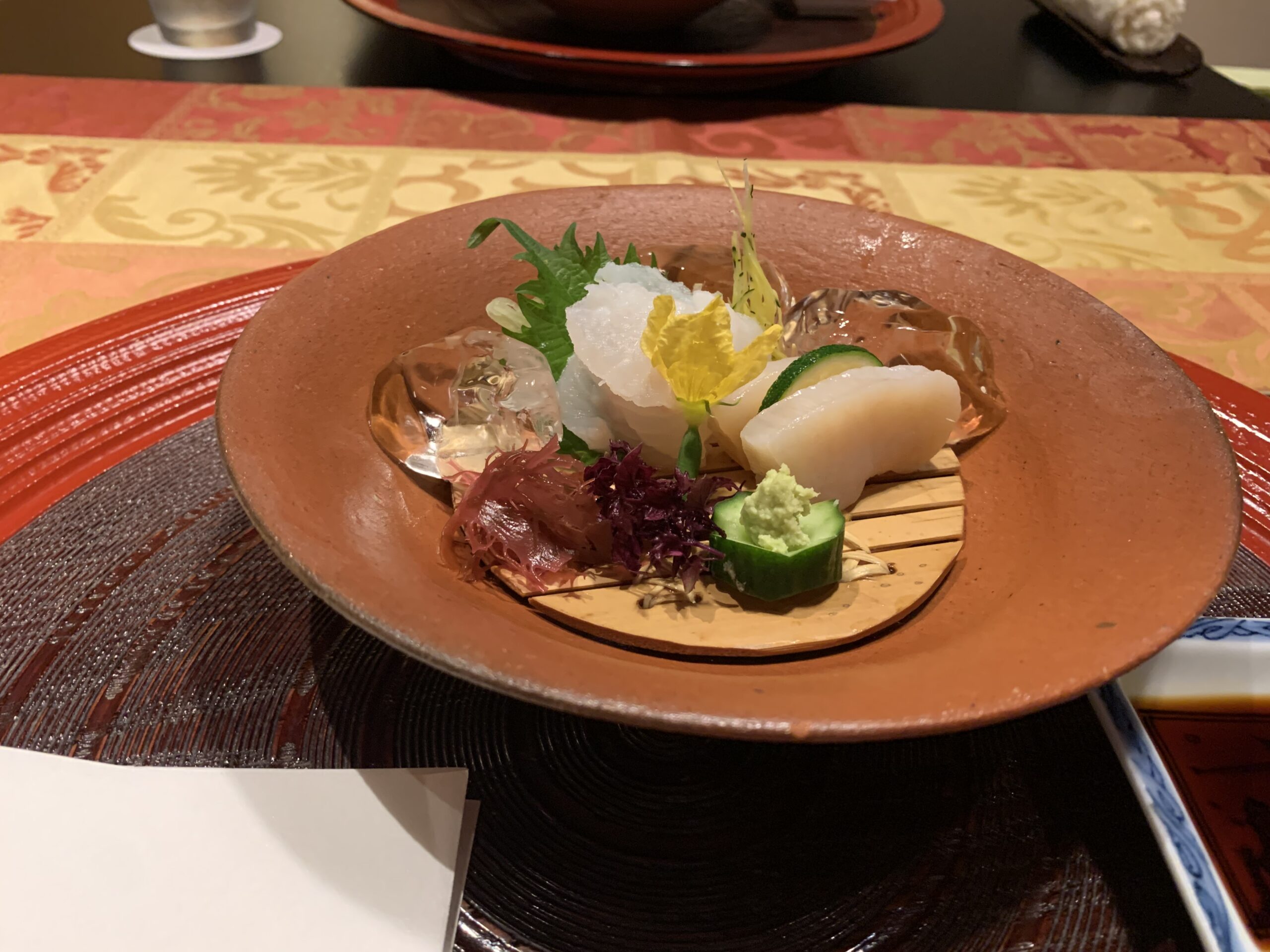
There’s a type of Japanese meal that isn’t really about eating.
It’s about the season. About slowing down. About the particular quality of light in autumn, or the first shoots of spring — expressed through food, one small dish at a time.
That’s kaiseki. And it’s unlike anything else in the world.
The Origins — Tea Came First
Kaiseki has its roots in the 16th century tea ceremony tradition.
Sen no Rikyu, the tea master who defined the Japanese tea ceremony as we know it, began offering a small meal before serving tea. The word kaiseki itself comes from a Zen Buddhist practice — monks would place warm stones (seki) in their robes (kai) to ease hunger during long meditation sessions.
In other words, kaiseki began as a simple, humble meal. Something to prepare the body — and the mind — for tea.
Over centuries, it evolved into the pinnacle of Japanese cuisine. But it never lost that original spirit: food as preparation, not as the main event.
Kaiseki vs Kaiseki — Two Words, Two Worlds
A quick note on something that confuses even Japanese people.
There are two words that sound identical: kaiseki (懐石) and kaiseki (会席).
懐石 (Kaiseki) — born from the tea ceremony. Quiet, seasonal, philosophical. The food exists to support the tea.
会席 (Kaiseki) — banquet cuisine. Developed for celebrations and sake drinking. More elaborate, more festive, less austere.
Same pronunciation. Completely different origins and spirits. When people talk about the refined, seasonal tasting menu experience, they usually mean 懐石.
Eating the Season
The defining characteristic of kaiseki is its relationship with nature’s calendar.
Spring: sea bream, butterbur shoots, cherry blossoms used as garnish
Summer: conger eel, sweetfish, winter melon
Autumn: matsutake mushroom, chestnuts, Pacific saury
Winter: crab, blowfish, oysters
The menu changes entirely with the seasons. The same restaurant visited in March and September will serve completely different food. Even the vessels change — delicate spring ceramics, warm earthy pottery in winter — because the bowl is part of the dish.
It’s Not Just About Eating
I want to be honest about something.
My first real experience with formal kaiseki was at a hatsugama — the first tea gathering of the New Year, a special occasion within the tea ceremony tradition. Not a restaurant. A ceremony.
I sat in seiza (formal kneeling posture) for four and a half hours. Each dish arrived slowly, quietly. There was no rushing. The dish I remember most clearly is tai no suzushime — vinegar-cured sea bream. Simple in appearance, but the craft behind it stayed with me long after.
At the very end, the tea came.
And I understood: the food wasn’t the point. It was the preparation. Everything before the tea existed to bring you into the right state of mind to receive it.
But Most Kaiseki Restaurants Are Much More Accessible
I should be clear — what I described above is a formal tea ceremony setting. It’s a special case.
In a kaiseki restaurant, you sit in a chair. There’s no strict posture required, no ritual etiquette to memorise. The focus is simply on the food, the season, and the craft.
Kaiseki isn’t just for tea ceremony practitioners. It’s for anyone who wants to slow down and pay attention.
A Typical Kaiseki Progression
The courses vary by restaurant, but a typical flow looks something like this:
- Sakizuke — a small opening dish, like an amuse-bouche
- Wanmono — a delicate clear soup
- Tsukuri — sashimi
- Yakimono — grilled dish, often fish
- Nimono — simmered dish
- Agemono — fried dish, often tempura
- Shokuji — rice, miso soup, pickles
- Mizumono — dessert or seasonal fruit
- Matcha — the tea
Each portion is small. The whole is calibrated so that by the end, you feel satisfied — not full. There’s a difference.
How to Book
Kaiseki restaurants almost always require advance reservation, often days or weeks ahead.
A few practical notes:
- Book by phone or online; many high-end places don’t take walk-ins
- Mention any dietary restrictions or allergies when reserving
- Cancellation policies are strict — last-minute cancellations often incur fees
- English-friendly options exist, especially in Kyoto and Tokyo
Where to go:
- Kyoto — where kaiseki originated; old establishments with deep traditions
- Tokyo — the highest concentration of Michelin-starred kaiseki in the world
- Kanazawa — home to Kaga cuisine, a regional variation with its own distinct character
Budget: from ¥10,000 per person, up to ¥30,000+ for the finest experiences
Not Just Filling Your Stomach
Kaiseki isn’t just about filling your stomach. It’s about something quieter than that.
In a world that moves fast, kaiseki asks you to slow down. To notice the colour of a ceramic bowl. To taste the difference between spring and autumn in a single bite. To be, for a few hours, completely present.
That’s what makes it unlike any other meal I know.
Have you experienced kaiseki, or is it on your list? Leave a comment below.

コメント