You’ve probably seen Japanese high school life in anime or dramas. But what is it actually like?
I went to a Japanese high school, and I want to give you the honest version — the schedules, the clubs, the rules, and the small rebellions that nobody puts in the guidebooks.
📅 A Typical Day
| Time | Activity |
|---|---|
| 6:30 AM | Wake up |
| 7:00 AM | Breakfast |
| 7:30 AM | Train to school |
| 8:00 AM | Arrive at school / homeroom |
| 8:30 AM–3:30 PM | Classes |
| 3:30 PM | Cleaning time |
| 4:00–7:00 PM | Club activities |
| 7:00 PM | Everyone must leave school |
| Evening | Dinner, homework, free time |
🎒 Getting to School
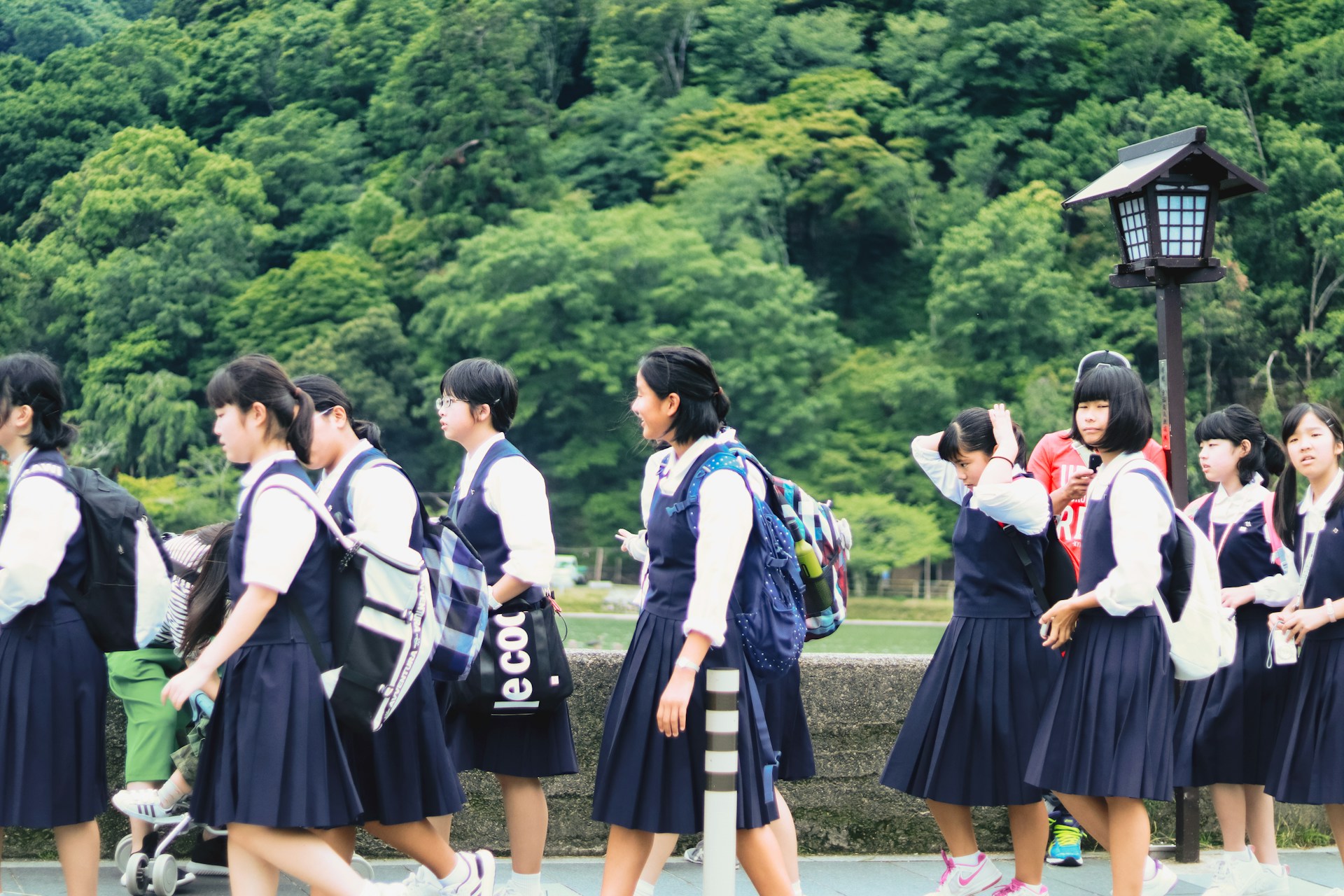
Wake up at 6:30, breakfast at 7:00, on the train by 7:30. Train commutes are extremely common for Japanese high schoolers — seeing groups of students in uniform on the morning train is one of the most ordinary sights in Japan.
The uniform itself is school-assigned. Every school has its own design, and experienced locals can often tell which school a student attends just from the uniform.
📚 Classes and School Rules
Classes run from around 8:30 AM to 3:30 PM.
Japanese high schools have strict rules — and they vary by school, but common ones include:
- No smartphones (many schools ban them entirely on school grounds)
- No part-time jobs (studying is the priority)
- No dyed hair or makeup (natural appearance only)
Compared to schools in many other countries, Japanese school rules are notably specific and detailed.
🍱 Lunchtime
Lunch depends on the student:
- Bento box — homemade lunch brought from home, often made by a parent
- Cafeteria — schools with a cafeteria offer hot lunch options
Eating lunch with friends is one of the highlights of the school day. The social dynamics of who sits where at lunch? Just as significant in Japan as anywhere else.
🧹 Cleaning Time
After classes, students clean the school themselves. Classrooms, hallways, toilets — all done by the students, not cleaning staff.
This surprises many international visitors. The idea is that students develop a sense of responsibility for shared spaces. It’s also probably why Japanese schools are so clean.
⚽ Club Activities (部活動)
This is one of the most distinctive parts of Japanese high school life.
After cleaning, most students head to club activities (bukatsu). Around 80% of Japanese high school students belong to at least one club — it’s almost considered part of the full high school experience.
Sports clubs: Badminton, volleyball, tennis, soccer, basketball, baseball, softball, rugby, judo, kendo, kyudo (archery), cheerleading, table tennis, swimming, track and field, and more.
Cultural clubs: Wind band, dance, drama, choir, tea ceremony, flower arranging, art, illustration, science, and more.
Students without a club are affectionately called kitakubu — literally “the going-home club.”
The unofficial club reputation system
In Japanese high schools, clubs carry certain social associations:
Boys’ clubs considered “cool”: soccer, basketball, baseball Girls’ clubs considered “cute”: wind band, tennis, basketball, dance
Nobody says this out loud. Everyone knows it anyway.
Club activities run until the 7:00 PM curfew, when everyone must leave the school building.
📸 After School
On days without club activities, the go-to options are:
McDonald’s and Starbucks Stopping at McDonald’s or Starbucks in uniform on the way home is a classic Japanese high school move. Seeing girls in school uniforms with Frappuccinos is one of the most distinctly Japanese everyday sights.
Purikura (プリクラ) Short for purinto kurabu (print club) — Japanese photo booth machines that take pictures, add filters, make your eyes bigger and your skin smoother, and print them out as stickers. Going to purikura with friends is a staple of Japanese high school girl culture. There’s genuinely nothing quite like it anywhere else in the world. If you visit Japan, find one and try it.
The Uniform Problem
Here’s something the anime never shows you.
Many schools have rules against students stopping anywhere after school while in uniform. Get spotted at a game centre or shopping mall in your school uniform, and a teacher on patrol duty might catch you — yes, teachers actually patrol these places 😅
The solution? Change clothes in the station bathroom.
You bring a set of regular clothes from home in your bag, slip into the station toilet, swap the uniform for something casual, and suddenly you’re free. That specific feeling — pulling off your school uniform in a train station bathroom and stepping out as a regular person — is a quietly universal Japanese high school experience.
🎉 School Events
Japanese high schools take events seriously.
Sports Day (体育祭) Class vs class competitions in various sports. More competitive than it sounds — there’s genuine class pride at stake, and the cheering sections get intense.
Culture Festival (文化祭) Classes and clubs set up stalls, performances, and exhibitions. Japanese culture festivals are elaborate — haunted houses, café stalls, full theatrical productions. This is the event that gets dramatised in every Japanese high school anime, and honestly, it’s not that exaggerated.
Choir Competition (合唱コンクール) Each class prepares and performs a song. The weeks of lunchtime practice, the arguments about harmonies, the moment it all comes together on stage — it becomes a genuine memory.
School Trip (修学旅行) A multi-day trip taken as an entire year group. Popular destinations include Kyoto, Nara, Okinawa, and Hokkaido. Often one of the most memorable experiences of high school.
Closing
Japanese high school life is three years packed with classes, clubs, events, friendships, and small rebellions against the rules.
The anime version isn’t that far off. It just leaves out the changing clothes in station bathrooms.
Curious about Japanese school life? Leave a comment below!


コメント