
If you have tattoos and you’re coming to Japan, here’s the honest headline: at pools, “tattoo-friendly” almost doesn’t exist — but “covered up and welcome” absolutely does. Once you understand that distinction, swimming in Japan stops being a wall and becomes a small piece of planning.
I’m a Japanese local, and this is the real picture of where you can and can’t swim with ink.
Why Tattoos Are an Issue at All

This surprises a lot of visitors, so it’s worth explaining first.
In Japan, visible tattoos have historically been associated with organised crime, and that association still shapes the rules at pools and bathing facilities. The bans usually aren’t aimed at foreign tourists personally — they’re blanket policies that simply say “no visible tattoos,” and staff apply them evenly to everyone.
So the key thing to understand is this: at almost every pool, it’s a facility rule about visible ink, not a personal judgement about you. And that word visible is the loophole the entire rest of this guide is built on.
The Honest Truth: Almost No Pool Allows Visible Tattoos
Let me save you the disappointment of chasing a myth. A pool that lets you swim with tattoos openly on display is extremely rare in Japan — including in Tokyo, where people often assume the big city is more relaxed. It generally isn’t.
Two categories to know:
Big leisure water parks — a firm no. Major parks enforce full bans, and being caught inside can mean being asked to leave. Based on their stated rules, tattoos are not permitted at parks including Nagashima Spa Land (Mie), Shibamasa World (Fukui), and Laguna Ten Bosch (Aichi). Some large Tokyo-area parks are just as strict, and at the toughest of them even a cover-up may not get you in. If a specific water park is the plan, check its current policy before buying tickets.
City and hotel pools — often “cover it and you’re in,” but confirm. This is the realistic path. Many municipal pools and hotel pools don’t allow visible tattoos, but explicitly permit you to swim if they’re fully covered with a rash guard or cover patches. Some Tokyo ward pools even keep loaner rash guards at the desk. That said, policies vary a lot even within Tokyo — a few facilities won’t admit tattooed guests even when covered — so treat “covered is usually fine” as the general pattern, not a guarantee, and check the specific pool’s rules before you go.
The Rash Guard Is the Real Answer

Here’s the single most useful thing to pack: a rash guard.
Because the issue is visible tattoos, covering them with a rash guard (swim shirt) or swim leggings satisfies the rule at a large share of pools that would otherwise turn you away. For smaller tattoos, cover patches do the same job. Some facilities also ask for these to be removed in changing areas or shared baths — but for swimming, covered is what counts.
Two things make this easy in Japan:
- Rash guards are totally normal swimwear here. Lots of Japanese people wear them for sun protection, so you won’t stand out at all.
- They’re cheap and everywhere — you can buy one after you arrive if you didn’t pack one.
A rash guard won’t override a strict water park’s total ban, and a small number of pools decline tattooed guests even when covered. But for the pools most travellers actually use — city pools, hotel pools, resort pools — covering up turns a “no” into a “yes” far more often than not. It’s the best single thing you can do; just pair it with a quick check of the specific venue.
Resort & Okinawa Pools: Plan for “Covered,” Not “Free”
It’s a common belief that Okinawa’s resort pools are a tattoo free-for-all. Honestly, they’re often not — several resort hotels there require tattoos to be covered with a rash guard or patches at their pools, and a few restrict them even when covered. Resort pools are a good option, but go in expecting a cover-up rule, not an exception to it. As always, check the individual hotel before you book.
The One Place You’re Free: the Sea
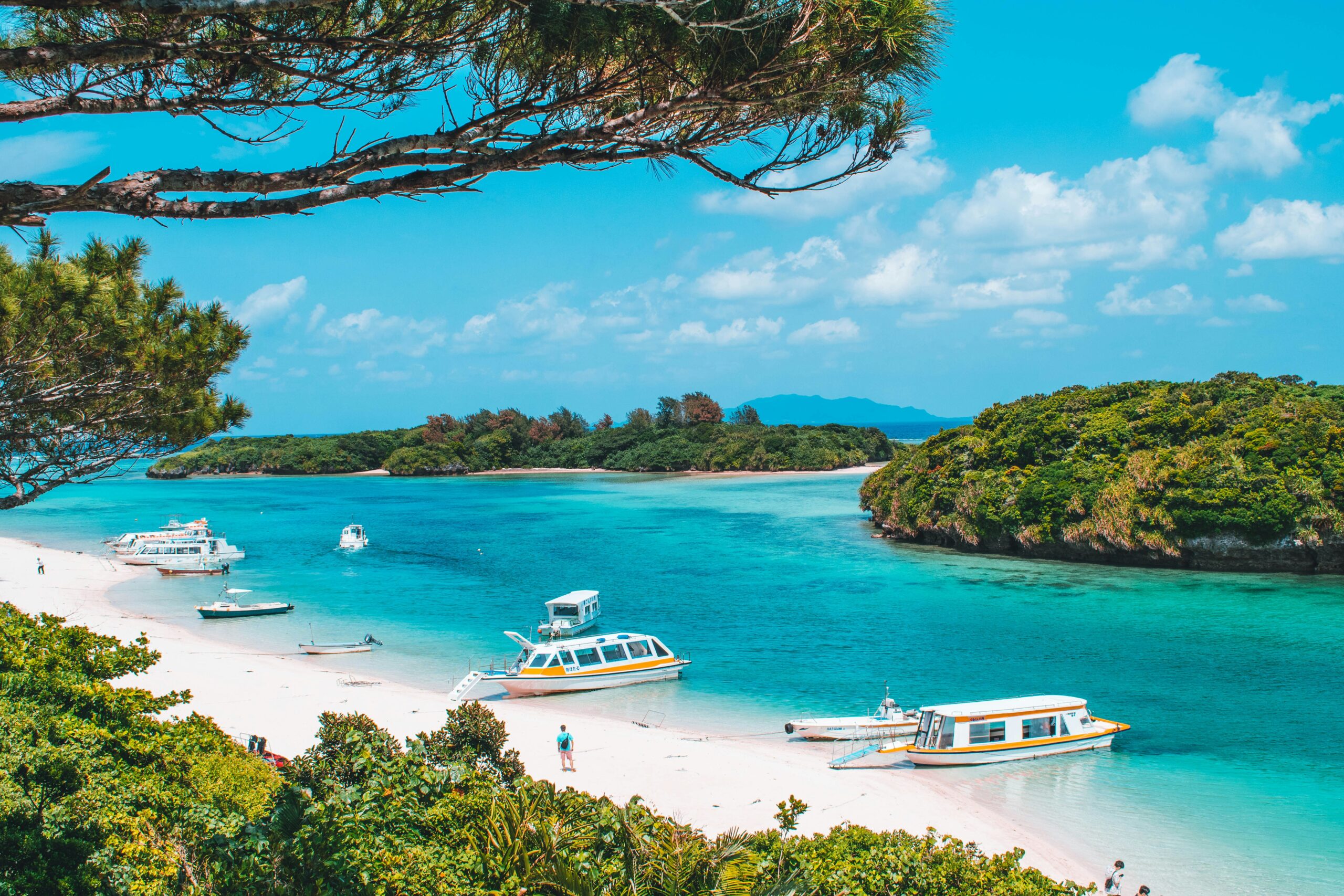
Here’s the genuinely good news. Public beaches — the open sea — generally have no tattoo restrictions at all. This is where the rules fall away.
So if what you want is to get in the water without managing a single policy, head for a public beach rather than a pool. Okinawa’s public beaches in particular are relaxed, and swimming in the sea there is about as unrestricted as it gets. (One caveat: some private hotel beaches apply the same cover-up rules as their pools, so “public beach” is the keyword.)
Quick Reference
- Big water parks (Nagashima, Shibamasa, Laguna Ten Bosch, etc.): assume no; a cover-up may not be enough — verify before booking
- City / municipal & hotel pools: often fine if fully covered with a rash guard or patches — but it varies, even within Tokyo, so check the specific pool
- Resort & Okinawa hotel pools: plan for a cover-up rule; check the specific hotel
- Public beaches (open sea): generally no restrictions — your freest option
- Private hotel beaches: may follow pool-style cover-up rules
A Note on Onsen (Hot Springs)
Pools and hot springs are separate worlds with separate rules, so just a word on onsen here. Traditional public onsen are often stricter than pools, but the landscape is shifting: “tattoo-friendly” onsen are increasing, and a private or family bath (kashikiri) lets you soak with no tattoo issue at all. I’ll cover onsen properly in its own guide.
Final Thoughts
Having tattoos doesn’t stop you swimming in Japan — it just means you pack a rash guard, check ahead, and pick your spot. Don’t chase the rare “tattoo-OK” pool; assume you’ll cover up, confirm the venue’s rule, and you’ll get into most city and hotel pools without drama. And when you want no rules at all, the sea is waiting.
(For more of the unwritten rules that catch visitors off guard, see → internal link: The Unspoken Rules of Japan.)


コメント